

Yellowstone National Park is the second largest park in the world. Having such vastly protected lands means animals are free to thrive in a terrain much safer and kinder to their survival than in areas where their main predators roam. Their main predator being “the human.” All year long Yellowstone sees to the protection of a wide array of animal: bison, wolf, grizzly, badger, antelope, elk, badger, coyote, and the list goes on. In short, you really are likely to run into any number of creature anywhere in the park, however, there are two places you are almost always guaranteed a good sighting.
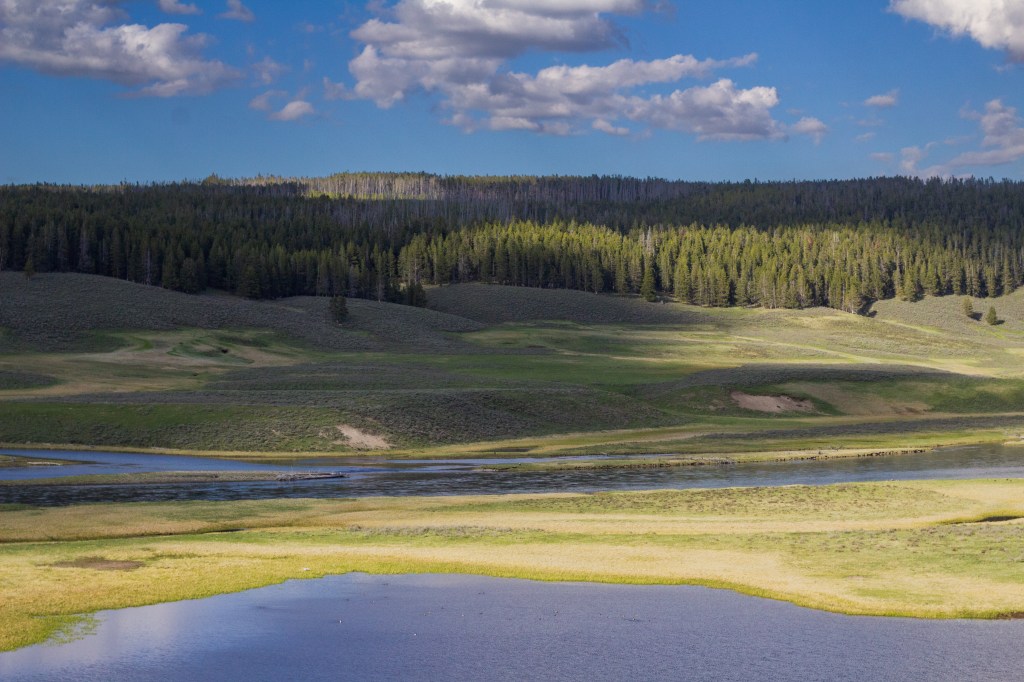
Lamar and Hayden Valleys. Just off the Grand Loop Road is the Lamar Valley, near the northeast corner of the park. If you choose to enter the park from that direction, you have to drive directly through it to see anything else worth while. Though all aspect of Northern animal can be spotted here, the most common are the Lamar Canyon wolves and bison. Lucky there are plenty of spots to pull the vehicle over and spend some time with a pair of binoculars surveying the land.
If you’re a true wildlife lover, you may consider camping in either of the two campgrounds right in the valley. The Slough Creek and Pebble Creek campgrounds are ideal for those with an interest in watching day-long activity or rising with the sun.
As you head south, Hayden Valley is the second wildlife haven. In fact, this valley is famous for its bison traffic jams. Which we experienced more than once. The broad valley funnels herds of them towards the road, so don’t be too shocked if you’re stuck for an hour… or sometimes longer. During our visit to Lamar and Hayden Valleys, we witnessed five different bird type, including osprey, swan, and bald eagle, thousands of bison, coyotes, red fox, elk, a black bear and a brown bear.
The entire park has embraced the nature of the area. Visitor Centers sell soft stuffies of park animals and you’ll notice countless created art forms in different techniques aiming to capture the magic of the wilderness. In fact, even our resort —with their individual log cabin homes— showcased the many animals spotted in Lamar and Hayden Valleys. Bears danced across wall paper and bison signs swung from the entry. When you pull in a huge statue of elk bulls fight in introduction and the community space has wooden cutouts of deer, bear, wolf, and so much more. We loved our stay at the Hibernation Station, not only because the magic of the park was so beautifully depicted, but because it was less than a mile from the West entrance and one of the quietest hotel locations. Feel free to check out their availability (and snag their 15% discount) here.
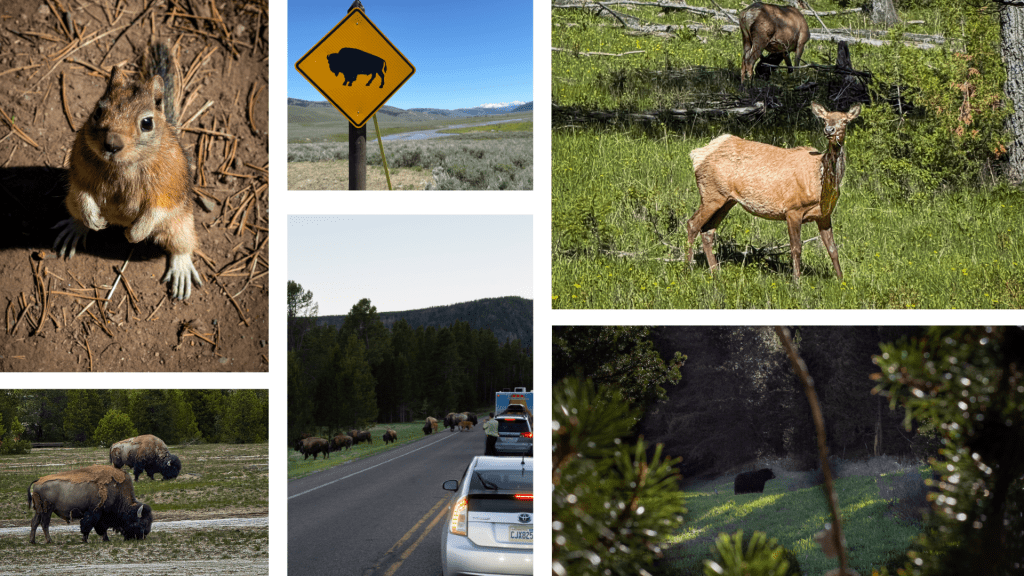
Because these valleys are so broad, you’ll want a pair of binoculars to make sighings easier. As most animals aim to blend in, they can be hard to see with the naked eye. Also, be conscious of the time of year. Lamar Valley is open year round, whereas Hayden Valley often closes due to snow fall, so plan to visit between May and October.
Animals are a wonder, so simple and pure in their survival. They instinctively know what is best and how to continue each generation. This means we need to adapt to their lifestyle for a better chance at seeing them in their most active state. Adapt by searching at dusk or dawn, when they are most active. Adapt by being still and calm in their environment. The quieter you are, the more likely the animals will feel safe and comfortable to move about.
Of course, pay attention to your fellow travelers as well. If you see a crowd of people pulled over, its likely for a reason. Perhaps they spotted a wolf pack or a grizzly and their cubs walking the field. Regardless, all animal sightings in Yellowstone National Park are special.
For a super easy to follow itinerary on what else to see in Yellowstone National Park, read my easy guide here.
As always, let me know what you think! I’d love to connect on instagram!
 Class and Sunshie